
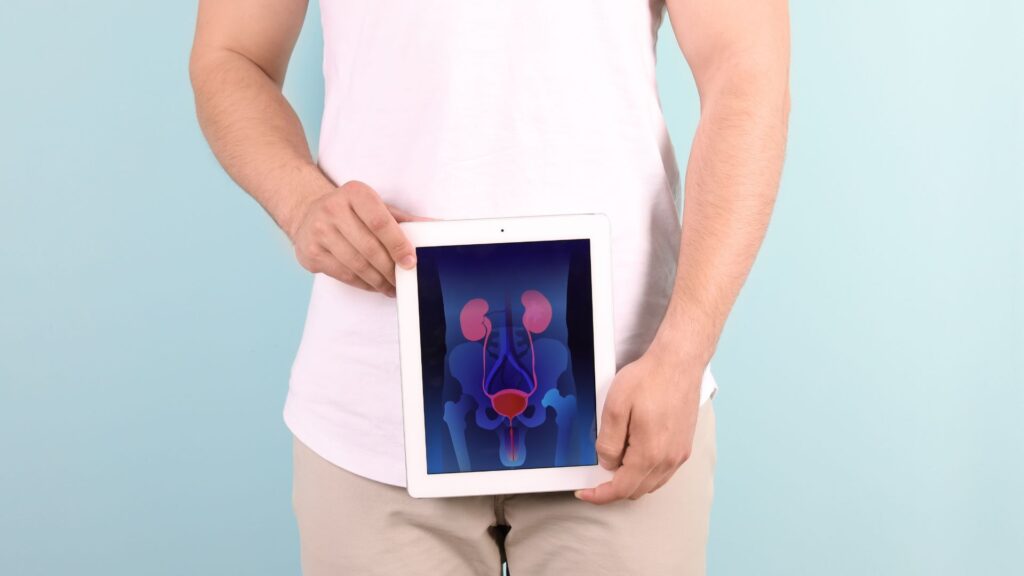
World Cancer Day is celebrated on February 4th, and it is crucial to focus our attention on the specific challenges we face in urology. Urological cancers can affect vital organs of the genitourinary system, and understanding their symptoms, risk factors, and treatments is essential for prevention and effective management.
Prostate Cancer
Prostate cancer is one of the most common cancers in men; it is a disease that develops in the prostate gland, a small, walnut-shaped structure located below the bladder in men. In its early stages, the prostate cancer It may not present any obvious symptoms. However, as it progresses, some men may experience changes in urinary frequency, difficulty starting or stopping the flow of urine, pain or burning during urination, or blood in the urine or semen.
Early detection is crucial. The most commonly used test is the Prostate-Specific Antigen (PSA), a blood test that can indicate the presence of abnormalities in the prostate gland. A physical examination and other diagnostic tests, such as a prostate biopsy, can confirm the presence and severity of cancer. The choice of treatment is personalized according to the specific characteristics of each case.
Bladder Cancer
Bladder cancer is a condition in which abnormal cells begin to grow uncontrollably in the inner lining of the bladder, the organ responsible for storing urine. Symptoms of bladder cancer may include blood in the urine (hematuria), changes in urinary habits such as increased urgency or frequency, pain when urinating, and pain in the lower back or pelvic area.
The diagnostic process usually begins with tests such as cystoscopy, where a thin tube with a camera is used to examine the inside of the bladder. Imaging studies, such as CT scans or MRIs, may also be performed. Confirmation of the diagnosis generally requires a biopsy, where a small tissue sample is removed for analysis. The treatment approach will depend on the stage and grade of the cancer.
Kidney Cancer
Kidney cancer, also known as renal cell carcinoma, originates in the small tubules of the kidney where blood is filtered to produce urine. In its early stages, kidney cancer may not cause any obvious symptoms. As it progresses, some patients may experience pain in the side or back, blood in the urine, fatigue, unexplained weight loss, and intermittent fever. Early detection becomes crucial for successful management.
Early detection and comprehensive evaluation are essential to determining the most effective treatment strategy. Kidney cancer is treatable, and advances in therapies offer a positive outlook, especially when addressed in its early stages.
Testicular Cancer
Although less common, testicular cancer does affect young men. Testicular cancer is a condition in which abnormal cells develop in one or both testicles. Symptoms of testicular cancer may include a lump or swelling in the testicle, pain or discomfort in the lower abdomen or groin, and changes in the texture or sensation of the testicle.
Regular self-examination is essential for detecting any changes and seeking medical attention if anything seems unusual. The diagnostic process typically begins with a physical exam and blood tests to assess tumor marker levels. Confirmation is made through imaging studies, such as testicular ultrasounds, and in some cases, biopsies to analyze tissue samples. Treatment for testicular cancer varies depending on the type and stage of the disease. Testicular cancer is highly treatable and, in many cases, curable, especially when detected in its early stages. Survival rates are significantly high, and many men who have overcome this disease lead full and healthy lives.
In it World Cancer Day, We reaffirm our commitment to the prevention and effective management of urological cancers. Early detection, ongoing education, and access to advanced treatment options are key in our fight against this disease. By understanding the symptoms and treatment options, we empower our patients to make informed decisions and face urological challenges with resilience.