
Prostate cancer
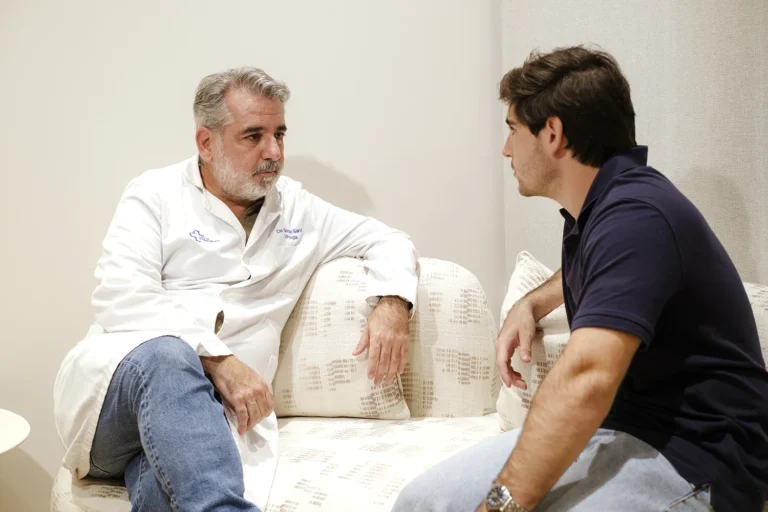
We answer some of the most common questions about urological consultations, tests, and treatments.
The main advantage is its high precision and thermal control. Unlike older techniques, modern cryosurgery allows for very rapid temperature changes (from -186°C to 40°C in about 30 seconds), which improves treatment efficacy and reduces the risk of affecting structures adjacent to the prostate.
Patients at high and medium risk of periprostatic infiltration with 2 or 3 of the following factors:
Recovery is usually quick, with a hospital stay of between 12 and 24 hours. The patient can resume their normal activities shortly after the procedure.
The technique has a low morbidity rate and a urinary incontinence incidence of less than 1%. Furthermore, it allows for control of sensitive areas to avoid damage to nearby structures.
Unlike radical surgery or radiotherapy, cryosurgery does not involve radiation or complex procedures. Furthermore, it can be repeated if the cancer persists, which is not the case with other techniques.
Yes, one of the main advantages of cryosurgery is that it can be repeated in case of elevated PSA or persistent cancer, without adding significant risks to the patient.
It works by freezing tumor cells, causing damage at the molecular, cellular, and structural levels. It also affects surrounding tissue and blood vessels, reducing blood flow to the tumor.
Cryosurgery works by using a controlled freezing and heating system to destroy tumor tissue. It uses argon gas to freeze and helium gas to rapidly heat, allowing for extreme temperature changes in seconds. This process is performed in cycles, usually two, and allows for highly precise treatment of the affected area, minimizing damage to nearby organs.
See more frequently asked questions