
GyneLase™: CO2 laser for urinary incontinence and vaginal rejuvenation

A new laser solution for comprehensive female intimate health is the GyneLase™ system with fractional CO2 laser technology. This revolutionary device combines the photothermal power of this unique CO2 laser with the delicate treatment required in an area as sensitive as the inside of the vagina. GyneLase™ is an effective, safe, risk-free, and complication-free solution that improves the quality of life for women whose experience has been affected by pregnancy, childbirth, or menopause.

Why is GyneLase™ the best choice?

The GyneLase™ fractional CO2 laser produces a controlled and highly precise thermal effect on the vaginal mucosa, causing tissue contraction and tightening, which restores the vaginal canal's natural elasticity. The laser energy, delivered along the vaginal wall, heats the tissue without damaging it, stimulating the formation of new collagen in the endopelvic fascia. The procedures are easy to perform, have no complications, and recovery is very quick, as neither surgery nor incisions are required. GyneLase™ is, without a doubt, the comprehensive laser treatment that gynecologists have been waiting for.

GyneLase™ Fractional CO2 Laser
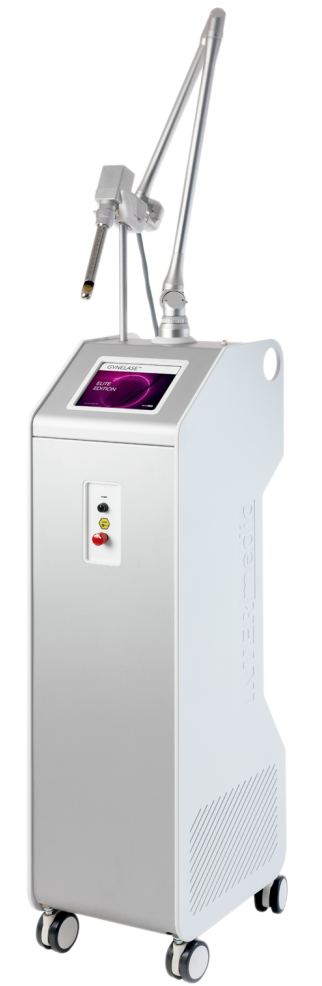
Main features of the treatment
· Tissue re-tensioning
• Increased natural elasticity
• Formation of new collagen

Who is this treatment suitable for?

GyneLase™ treatment is indicated for women with mild to moderate urinary incontinence, as well as those experiencing loss of vaginal tone or vaginal canal laxity. It is also suitable for patients who have experienced changes following pregnancy, childbirth, or menopause and are seeking to improve their intimate well-being. It is characterized as an outpatient procedure that is minimally invasive and highly tolerable. Furthermore, it requires no surgery or incisions, making it a particularly attractive option for patients who want an effective solution with a quick recovery and no significant complications.

In what cases does the GyneLase™ laser help?

The GyneLase™ system allows addressing different needs within female intimate health through specific applications based on fractional CO2 laser technology.
1
Urinary incontinence syndrome
It acts on vaginal tissues, stimulating their contraction and tightening. This allows for the restoration of urinary retention capacity in mild to moderate cases without the need for surgery.
2
Vaginal rejuvenation
It stimulates the vaginal mucosa to restore its structure and elasticity. The laser promotes tissue regeneration and restores firmness and contractility.
3
Vaginal relaxation syndrome
The vaginal mucosa is stimulated to regain its strength and tone. This restores a woman's ability to fully enjoy sexual relations.
4
Vulvovaginal cosmetic surgery
Applicable in procedures such as labiaplasty, perineoplasty, genital redesign or bleaching. It allows for improvement in the appearance of the intimate area and increases the patient's confidence.

Results, benefits and advantages

The advanced technology of the GyneLase™ system allows precise action on tissues, improving functionality and quality of life without the need for surgery.
Aesthetic improvement
Genital redesign
Sexual fulfillment
Increased friction and rubbing
High tolerance
Good patient acceptance
Rapid recovery
Quick return to routine
Stimulates collagen
Regenerates vaginal tissue
Functional improvement
Restore vaginal tone

Areas of specialization

FAQ

We answer some of the most common questions about urological consultations, tests, and treatments.

The laser system used is notable for being multidisciplinary, versatile, and expandable, allowing it to be adapted to different gynecological treatments. It incorporates a random pulse pattern that improves safety during procedures, as well as precise dosimetric control specifically designed for vaginal mucosa. Furthermore, it features exclusive technologies such as GynePulse™ and GyneScan™, which guarantee maximum surgical precision. Its use is facilitated by intuitive software with a color touchscreen and the availability of specific gynecological accessories, with the possibility of expansion to other medical applications. 

Gynecological lasers have multiple therapeutic and aesthetic applications, allowing for the safe and minimally invasive treatment of various conditions affecting the female intimate area. They are used in procedures such as vaginal rejuvenation, the treatment of vaginal atrophy, and vaginal relaxation syndrome.

Furthermore, it is effective in treating female urinary incontinence, human papillomavirus (HPV), and cystocele or rectocele. It is also used in vulvovaginal cosmetic surgery, such as labiaplasty, perineoplasty, and genital redesign, as well as in genital bleaching procedures.

Recovery is quick, as it is an outpatient procedure without surgery. Patients usually resume their normal activities shortly afterward, with a gradual improvement.

GyneLase™ is a safe treatment, with no significant risks or complications depending on its application. Its non-invasive nature significantly reduces the occurrence of adverse effects.

Unlike other techniques, it requires no surgery or incisions. It uses laser technology to stimulate vaginal tissue from the inside, offering a less invasive solution with a faster recovery.

It uses a fractional CO2 laser with precise energy control, systems such as GynePulse™ and GyneScan™, and intuitive software. It is specifically designed for gynecological treatments requiring high precision and safety.

The stretching of the vaginal canal during childbirth or the natural aging process can lead to vaginal laxity. This loss of tone affects both the functionality and quality of sexual relations, and can also impact a woman's self-esteem and confidence.

In this context, clinical assessment allows for the identification of the degree of involvement and the determination of the most appropriate treatment. The use of advanced technologies such as fractional CO2 laser offers an effective alternative for addressing these conditions without resorting to invasive surgical procedures.

See more frequently asked questions