
Endoscopic lithotripsy - Endoscopic laser surgery treatment

Endoscopic laser surgery for urinary stones is an advanced, minimally invasive, and highly effective technique for removing stones from the bladder and urinary tract. It uses a holmium or thulium laser to fragment the stones without the need for open surgery. This procedure allows for faster recovery, less postoperative pain, and high precision, reducing complications and improving the patient's quality of life.

Symptoms and early detection

Urinary stones, also known as kidney stones or nephrolithiasis, are solid formations that develop from minerals and salts in the urinary tract, especially in the kidneys, ureters, or bladder. Their formation can be related to factors such as dehydration, urinary tract infections, an inadequate diet, or genetic predisposition. Depending on their size and location, they can cause intense pain, infections, difficulty urinating, or blood in the urine. Early detection is essential to avoid more serious complications, such as urinary obstructions or kidney damage. Diagnostic tests include ultrasound, X-ray, CT scan, and urinalysis. These tools allow us to choose the most appropriate treatment.

Early detection is essential
Symptoms related to urinary stones
• Intense pain
• Urinary tract infections
• Blood in the urine

Who is this treatment suitable for?

Endoscopic laser treatment is indicated for patients with symptomatic urinary stones, especially when they cause pain, recurrent infections, or difficulty passing naturally. It is also an ideal option for medium to large stones that do not respond to conservative or pharmacological treatments. Furthermore, it is recommended for patients seeking a minimally invasive alternative to traditional surgery. A specialist medical evaluation is key to determining the appropriate treatment, taking into account factors such as the stone's location, the patient's overall health, and the progression of the disease.

How the procedure is performed

1
Prior assessment

The process begins with a comprehensive clinical study, including imaging tests to precisely locate the stone. This allows for personalized and safe treatment planning.

2
Endoscopic access

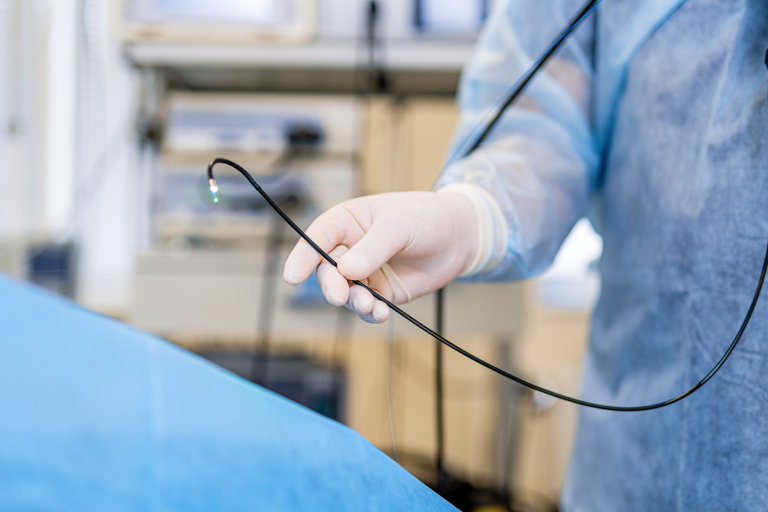
An endoscope is inserted through the urethra, without external incisions, until it reaches the location of the stone. This approach minimizes tissue damage.

3
Laser fragmentation

Using the Holmium laser, the stone is fragmented into very small particles. These can then be extracted or eliminated naturally through urine.

4
Rapid recovery

Following the procedure, the patient typically experiences a rapid recovery, with less pain and a shorter hospital stay. In many cases, normal activity is resumed within a few days.

Results, benefits and advantages

Endoscopic laser treatment allows for the effective removal of stones, reducing discomfort and risks associated with more aggressive techniques.
High efficiency
Eliminates calculations with high precision
Minimal invasion
Without visible external incisions
Rapid recovery
Shorter recovery time
Less pain
Reduces postoperative discomfort
High security
Low risk of complications
Lasting results
Lower recurrence rate

Areas of specialization

FAQ

We answer some of the most common questions about urological consultations, tests, and treatments.

The ideal patient is someone with symptomatic urinary stones that cannot be eliminated naturally or with medication. It is also suitable for people with medium or large stones, or with recurrent episodes of kidney stones. The indication should always be evaluated by a urologist.

Recovery is usually quick, as it is a minimally invasive technique. The patient may experience mild discomfort or burning when urinating for a few days. In most cases, daily activities can be resumed within a short period of time.

Although it is a safe procedure, mild side effects such as urinary discomfort, blood in the urine, or transient urinary tract infections may occur. Serious complications are rare when the technique is performed by experienced professionals.

Unlike extracorporeal shock wave lithotripsy, endoscopic laser therapy acts directly on the stone, offering greater precision and effectiveness in a single procedure. Compared to open surgery, it is less invasive, with less pain and a faster recovery.

Yes, there is a risk of recurrence if predisposing factors are not controlled. Therefore, after treatment, it is recommended to follow medical guidelines such as proper hydration, dietary changes, and regular checkups to prevent new formations.

Both lasers are used to fragment urinary stones using endoscopic techniques, but the Holmium laser offers more versatile and widely used fragmentation, while the Thulium laser stands out for its greater precision and less retropulsion of the fragments, which can facilitate their removal.

See more frequently asked questions