
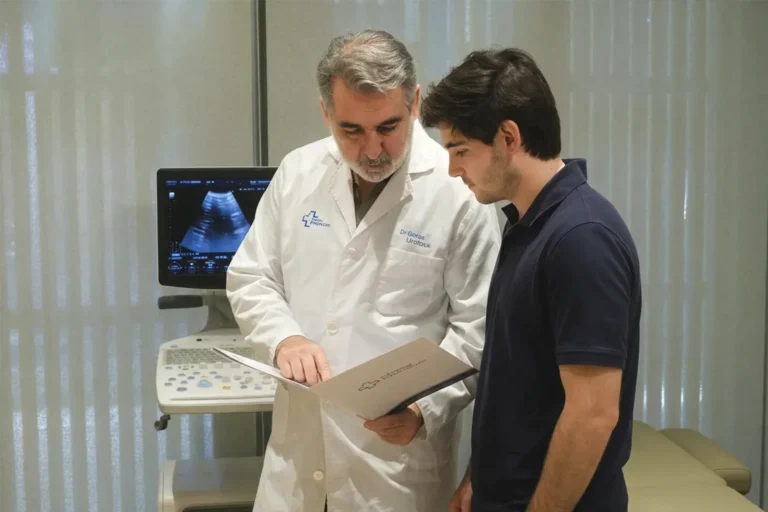
Focal therapy for prostate cancer

Focal therapy for prostate cancer is a treatment that selectively destroys the area where the tumor develops, preserving the surrounding healthy tissue. It is a minimally invasive alternative, using advanced technologies and techniques such as HIFU, electroporation, and cryosurgery. Designed to minimize the impact on the body, its main advantage is the low complication rate, making it a therapeutic option for highly selected cases.

Who is this therapy suitable for?

Focal therapy is indicated for patients with localized, low- or intermediate-risk prostate cancer, in whom the tumor is clearly identified and confined to a specific area of the gland. Accurate diagnosis, supported by advanced imaging tests and targeted biopsies, is essential to ensure that treatment targets only the affected area. This procedure is reserved for highly selected cases where it is possible to preserve healthy prostate tissue without compromising cancer control. Therefore, a thorough patient evaluation is crucial.

How is focal therapy performed?

1
Prior assessment

The process begins with a comprehensive patient evaluation. Both their clinical characteristics and tumor type are analyzed to confirm whether they meet the criteria for focal therapy. This phase is crucial for ensuring the safety and efficacy of the treatment.

2
Case selection

Focal therapy is indicated only in highly selected cases. This requires careful assessment of the tumor's location within the prostate, as well as its behavior. This therapeutic approach is only considered when certain conditions are met.

3
Targeted application

The procedure involves selectively destroying the area where the tumor is located. This approach allows direct treatment of the tumor, avoiding healthy areas of the prostate and thus reducing the overall impact of the treatment.

4
Minimally invasive approach

One of the main features of this technique is its minimally invasive nature, utilizing advanced HIFU, electroporation, and cryosurgery technologies. This translates into less trauma for the patient and a significant reduction in potential complications compared to other, more extensive treatments.

Results, benefits and advantages

The targeted approach of focal therapy allows for precise treatment of the tumor, with less impact on the body and a favorable safety profile.
Selective treatment
It only acts on the tumorous area
Less invasive
Reduces aggression to the body
Low complication
Fewer adverse effects
Tissue preservation
Respect healthy tissue
High precision
Precise localized treatment
Personalized approach
Indication according to each case

Areas of specialization

FAQ

We answer some of the most common questions about urological consultations, tests, and treatments.

 Focal therapy is indicated in highly selected cases of prostate cancer. To determine if a patient is a candidate, a comprehensive evaluation is essential, analyzing both their clinical condition and the characteristics of the tumor. This therapeutic option is only considered when specific criteria are met.

This procedure should be performed by specialists experienced in the management of prostate cancer. Proper patient selection and precise treatment application require in-depth knowledge of the disease and available techniques.

 Because it is a minimally invasive procedure, recovery is usually more favorable compared to other treatment options. The reduced trauma to the body helps minimize complications and allows for a more controlled recovery for the patient.

One of the main advantages of focal therapy is its low complication rate. By acting only on the affected area, side effects are minimized compared to more extensive treatments, although each case should always be evaluated individually.

 Unlike other approaches that treat the entire prostate gland, focal therapy focuses exclusively on the area where the tumor is located. This allows for the preservation of healthy tissue and reduces the overall impact of the treatment, maintaining a more conservative approach.

 The success of focal therapy depends on proper patient selection. Therefore, a detailed analysis of the tumor type and location is essential. This study allows us to determine if the treatment is appropriate and to plan it precisely.

See more frequently asked questions