Early detection is essential
We answer some of the most common questions about urological consultations, tests, and treatments.
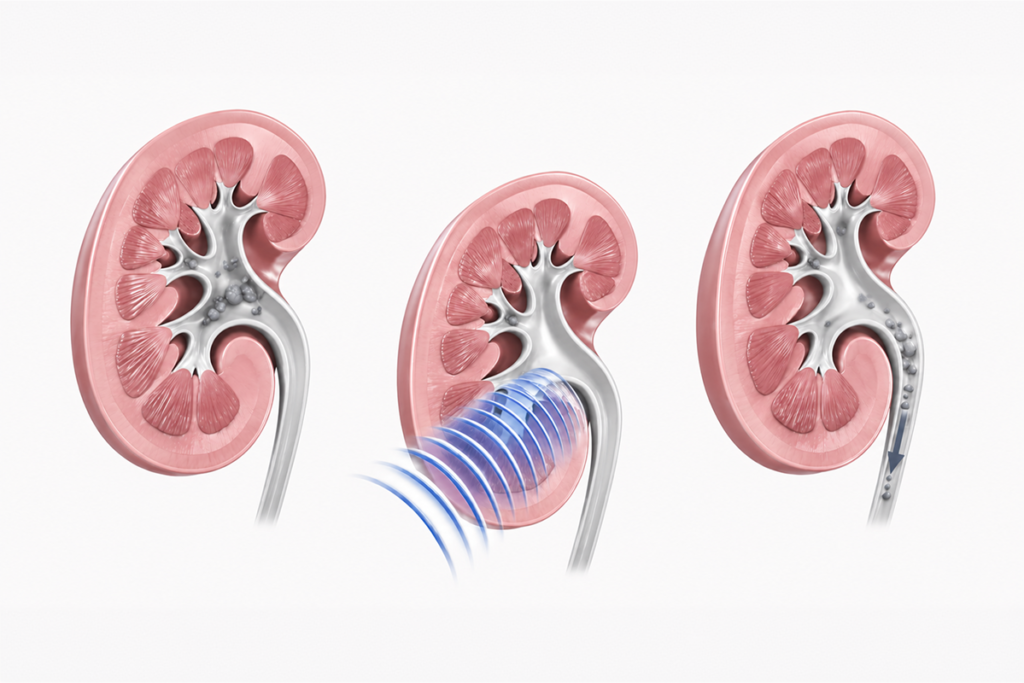
Urinary stones, or kidney stones, are solid formations composed of minerals and salts that develop in the urinary tract. They can be located in the kidneys, ureters, or bladder and cause symptoms such as severe pain, urinary tract infections, or blood in the urine.
The most common symptoms are intense pain, difficulty urinating, urinary tract infections, and blood in the urine. The intensity of the discomfort depends on the size and location of the urinary stone within the urinary tract.
Early detection helps prevent complications such as urinary obstructions or kidney damage. Early diagnosis allows for the identification of the size and location of the urinary stone and the selection of the most appropriate treatment for each patient.
Diagnosis can be made using ultrasound, X-ray, CT scan, and urinalysis. These tests allow for the identification of the characteristics of the urinary stone and facilitate a more precise and personalized clinical assessment.
Urinary stones can occur in people with frequent dehydration, urinary tract infections, certain dietary habits, or a genetic predisposition. The appearance and progression of stones depend on various clinical and personal factors.
Yes. Depending on their size and location, they can cause urinary obstructions, recurrent infections, or affect kidney function. For this reason, it is important to see a specialist if you experience symptoms consistent with urinary stones.
See more frequently asked questions