
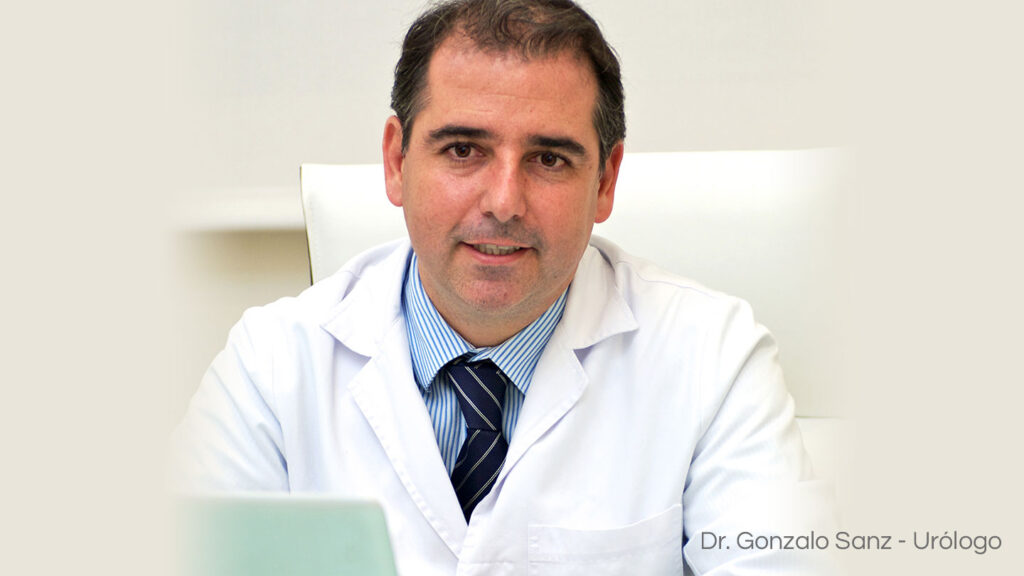
Dr. Gonzalo Sanz welcomes us to his office at Clínica Premium and tells us about some of the peculiarities of this type of surgery, which has served to improve in a spectacular way many patients who have placed their trust in this brilliant advance of modern medicine, with spectacular advantages.
Dr. Sanz, how could we define cryosurgery in relation to prostate cancer?
Cryosurgery of the prostate is a cellular procedure that involves the controlled freezing of the prostate gland to destroy cancerous cells. The damage caused by freezing occurs at several levels: molecular, cellular, and the entire tissue structure.
And how is this surgical technique performed?
Cryosurgery is a surgical procedure performed in an operating room with the patient under anesthesia. The technique involves inserting an ultrasound probe through the rectum to obtain a precise image of the prostate. Under continuous ultrasound guidance, cryoablation probes are placed to freeze the prostate and destroy all tumor cells due to the extreme cold. This sequence allows for continuous monitoring, and along with the placement of thermocouples or sensors in the most sensitive areas (rectum, bladder, urethra), crucial information is obtained about the temperature of these areas. The purpose of this complex process is to maintain complete control of the treatment area without affecting the important organs adjacent to the prostate. The most significant advantage of this new technique compared to those used in the 1990s is the use of argon gas for freezing and helium gas for rapid heating (the probe temperature can rise from -186°C to 40°C in 30 seconds). During cryosurgery, two freezing cycles are typically applied.
What advantages does this surgical technique offer over others?
Generally, a minimal hospital stay of between 12 and 24 hours, without the need for blood transfusions, rapid recovery to normal activity, without admission to the ICU, lower morbidity, with an incidence of urinary incontinence of less than 1%, a high quality of life index, without the undesirable short- and long-term radiation effects of Radiotherapy and Brachytherapy, and the possibility of repeating the surgery if any cancerous cells persist, without additional risk to the patient, nor complicated surgical interventions.
And what is also very important is that it can be used as rescue therapy for failures of other techniques such as Radiotherapy – Brachytherapy.
Which patients are eligible for this type of surgery?
The indications for cryosurgery in the treatment of patients with prostate cancer: patients with high and medium risk of periprostatic infiltration with 2 or 3 of the following factors (any age and general condition) with PSA greater than or equal to 10, Gleason greater than or equal to 7, Stage T2b-T3a, patients with cancer limited to the gland with low risk of extracapsular extension with stage T1b-T2a, PSA < or equal to 10, Gleason < or equal to 6, multiple pathologies, high surgical risk, as an alternative to surgery and radiation in patients with cancer at low risk of extracapsular extension, also in patients with coagulation disorders, and patients who do not consent to receive blood transfusions. Patients with cancer that is resistant or recurrent after brachytherapy and/or external beam radiotherapy, patients with extracapsular cancer (T3), in patients with unilateral, unifocal cancer and low risk of extracapsular extension: to try to avoid impotence by preserving the neurovascular band on one side.