
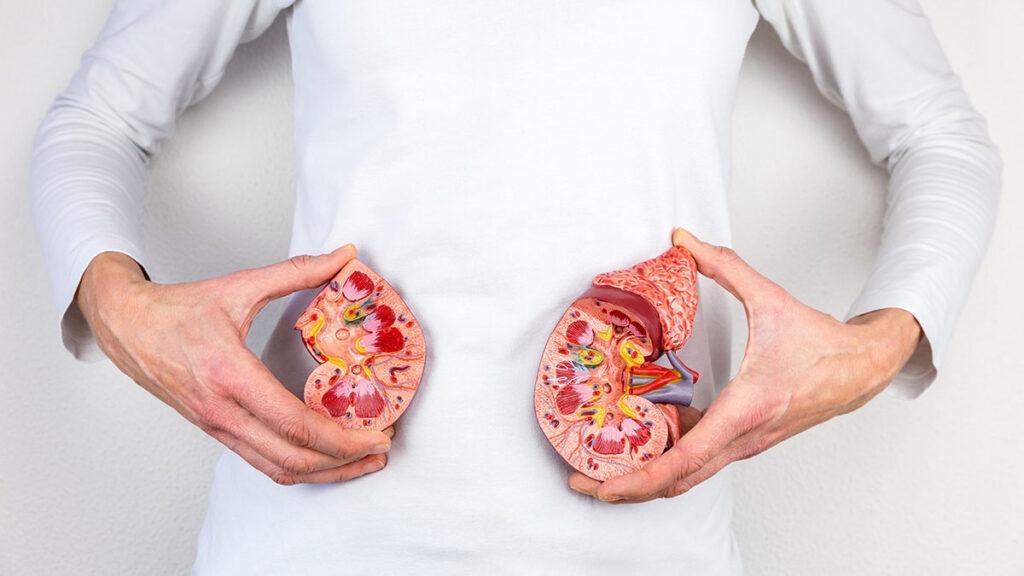
The kidneys are responsible for removing waste and fluids from the body to make urine. Sometimes, when you have an excess of some waste and not enough fluids in your blood, this waste can accumulate in your kidneys; this is what we call kidney stones.
Kidney stones form when salts and minerals in urine become too concentrated and crystallize; over weeks or months, the crystals can enlarge and form stones.
Small kidney stones (less than 5 mm) can pass through the urinary tract and be eliminated in the urine with little or no pain. However, large stones are often very painful, can obstruct the flow of urine, cause blood in the urine, and other symptoms. They can also lead to kidney and urinary tract problems.
Factors that contribute to the formation of kidney stones include: excess body weight, diet, some medical conditions, and certain medications.
Kidney stones usually don't cause symptoms until they begin to move into the ureters (the tubes that connect the kidneys and bladder) or the kidneys themselves. This can cause ureteral spasms, which are often very painful. When a kidney stone becomes lodged in the ureters, it can block the flow of urine and even cause the kidneys to swell.
Some of the following signs and symptoms that kidney stones may cause are:
- Pain or burning sensation when urinating.
- Urinating more frequently, a constant need to go to the bathroom, urine usually comes out in small amounts.
- Intense or sharp pain under the ribs and back.
- Pain in the lower abdomen.
- Cloudy urine, sometimes pink, red or brown in color and with a strong odor.
- Fever and chills may sometimes occur, especially if there is an infection.
Kidney stones do not cause permanent damage if detected early. Passing kidney stones can be quite painful; depending on the case, pain relievers and plenty of water may be sufficient. However, in some cases, especially when the stones become lodged in the urinary tract, urinary tract infections and other complications can occur, requiring surgery.
Therefore, it is important to see a doctor when any of these symptoms appear, in order to address the problem promptly with the appropriate treatment and/or prevent infections. Certain preventative measures will also be recommended to reduce the risk of developing kidney stones.
Among the recommendations for preventing kidney stones, we can highlight:
- Drink at least 3 liters of fluid daily: mainly water and fruit juices or some herbal teas.
- Dietary changes: avoid foods containing calcium and oxalate (coffee, cocoa, cola, nuts, wheat, etc.), in certain cases it is also recommended to reduce the intake of meat, fish and poultry.
- Once the patient has been evaluated, certain medications may be prescribed to prevent stone formation and control the amount of acid in the urine. These include diuretics and other drugs that help reduce the amount of calcium in the intestines and prevent it from being excreted in the urine.